This editorial ranks six portable camping stoves by heat output, fuel format, packed size, wind control, and ignition reliability. The lineup spans integrated backpacking systems, compact tabletop burners, and freestanding power rigs for group cooking.

The First Penguin Portable Camping Stove with C…
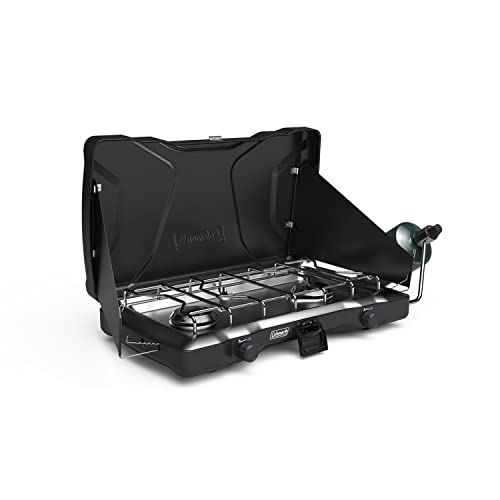
Coleman Triton 2-Burner Propane Camping Stove

Fire-Maple Fixed Star 1 Backpacking and Camping…

Gas One Portable Butane Camping Stove with Case
Propane 2 Burner Portable Camping Stove with Ca…

Camp Chef’s EX60LW Explorer
Notable Insights
- The First Penguin butane stove outputs 17,700 BTU (5,200W) in a 2.97 lb foldable body measuring 9.8 x 4.3 x 3.5 in.
- The Coleman Triton produces 22,000 BTU across two burners and runs about 1 hour on high from one 16 oz propane cylinder.
- The Fire-Maple Fixed Star 1 cuts boil times by up to 30% and nests the full kit inside a 1-liter pot at 18 oz.
- The Gas One GS-1000G delivers 7,650 BTU with CSA-approved safety, an auto-eject system at 0.7 kg, and a piezo starter.
- Camp Chef’s EX60LW Explorer drives 60,000 BTU total (2 x 30,000 BTU) with detachable legs and a three-sided windscreen.
- The compact dual-burner propane stove totals 17,000 BTU and supports two 10-inch pans while folding to 9.5 x 9 x 4.6 in.
Editor’s Shortlist
- Best ultralight system: Fire-Maple Fixed Star 1
- Best compact tabletop (butane): Gas One GS-1000G
- Best portable two-burner (tabletop): Coleman Triton
- Highest heat in a compact foldable: The First Penguin
- Best car-camping power rig: Camp Chef EX60LW Explorer
- Best small-footprint dual-burner: Propane 2 Burner with Carrying Bag
1. The First Penguin Portable Camping Stove with Carrying Case (10,000 BTU)
This foldable butane burner prioritizes high heat in a compact iron chassis and drives rapid boils for single-pot meals, skillet sears, and coffee kettles.
| Heat Output | 17,700 BTU (maximum 5,200W) |
| Weight | 2.97 lb |
| Dimensions | 9.8 x 4.3 x 3.5 in |
| Material | Iron construction with collapsible trivet |
| Ignition | Electronic ignition |
| Included | Carrying bag |
| Fuel | Butane cartridge (sold separately) |
The collapsible trivet stabilizes cookware across varied bases (8-inch fry pans, 1.0–1.5 liter pots, enamel kettles), and the 5,200W ceiling shortens boil times for tight weather windows on ridge camps, lakeside docks, and trailhead pullouts. Electronic ignition lights fast and reduces wasted fuel during repeated starts. The iron shell carries well inside truck beds, rooftop boxes, and gear totes with the included bag.
2. Coleman Triton 2-Burner Propane Camping Stove
This two-burner tabletop unit supplies kitchen-style control for family breakfasts, pasta nights, and griddle work across weekend trips and road loops.
| Total Output | 22,000 BTU across two burners |
| Burn Time | Up to 1 hour on high from a 16 oz propane cylinder |
| Wind Protection | Integrated wind guards |
| Grate | Removable chrome-plated grate |
| Controls | Independently adjustable burners with improved knob rotation |
| Transport | Heavy-duty latch for secure carry and storage |
Side wind guards shield flames from gusts at exposed sites (beaches, prairie campgrounds, high-desert mesas) and stabilize pan temperatures. The chrome grate lifts for quick cleanup after bacon, smash burgers, or fajita sears. The reinforced latch keeps the lid shut in trunks, roof pods, and pickup drawers.
3. Fire-Maple Fixed Star 1 Backpacking and Camping Stove System
This integrated cook set slashes boil times with a heat-exchanger pot and nests the complete kit into a single liter for compact packing.
| Weight | 18 oz (complete system) |
| Pot Capacity | 1-liter cook pot (stove, bowl, and fuel space nest inside) |
| Boil Efficiency | Up to 30% faster than traditional backpacking stoves |
| Ignition | Built-in piezoelectric ignitor |
| Construction | Hard anodized aluminum, locking stainless handle, neoprene cover |
| Fuel Compatibility | Accepts most canisters except Coleman brands |
The heat-exchange base concentrates energy and reduces canister burn on multi-day routes (overnight loops, alpine starts, shoulder-season treks). The piezo ignitor sparks without matches, and the neoprene sleeve protects hands during pour-offs for freeze-dried meals, instant noodles, and coffee presses. A compact windscreen improves speed in breezy saddles, river bars, and canyon rims.
4. Gas One Portable Butane Camping Stove with Case
This tabletop butane burner balances output and efficiency for quiet cooking in campgrounds, picnic shelters, and trailhead lots.
| Model | GS-1000G |
| Output | 7,650 BTU |
| Weight | 3.1 lb |
| Dimensions | 13.5 x 11 x 4.45 in |
| Fuel | 8 oz butane canisters (sold separately) |
| Safety | CSA-approved with automatic cartridge ejection at 0.7 kg force and piezo starter |
CSA certification verifies safety engineering, and the auto-eject system disengages the cartridge under overpressure. The piezo starter lights consistently, and the fine valve holds stable simmers for oatmeal, sauces, and pour-over kettles. The hard case protects the burner inside truck beds, cargo bins, and canoe barrels.
6. Camp Chef’s EX60LW Explorer
This freestanding propane rig delivers restaurant-level output for group meals and supports a broad accessory ecosystem for varied cooking styles.
| Total Output | 60,000 BTU (dual 30,000 BTU burners) |
| Fuel | Propane |
| Accessory System | Compatible with Camp Chef 14-inch accessories (grill box, pizza oven) |
| Legs | Detachable legs for transport and stability |
| Wind Protection | Three-sided windscreen |
| Design | Modular cook system for multi-use outdoor cooking |
The three-sided windscreen steadies flames on open lots, beach fronts, and windy meadows. Detachable legs set a proper work height on gravel, turf, and packed dirt. The 14-inch accessory platform expands methods with grill boxes, pizza ovens, and griddles, so one frame covers burgers, pies, and pancake runs without extra stands.
5. Propane 2 Burner Portable Camping Stove with Carrying Bag
This compact dual-burner unit delivers two-pan capability in tight spaces and folds small for minimal storage demands.
| Total Output | 17,000 BTU |
| Folded Size | 9.5 x 9 x 4.6 in |
| Weight | 4.2 lb |
| Design | Hexagonal body with independent control knobs |
| Burners | Stainless steel burners with built-in ignitors |
| Cookware Capacity | Supports two 10-inch pans simultaneously |
| Fuel | Propane |
The hexagonal chassis spreads load for pot stability on picnic tables, driftwood benches, and truck tailgates. Independent valves set separate heats for eggs and coffee or pasta and sauce. Built-in ignitors speed startup and cut match clutter across compact kitchen totes, bear bins, and river dry bags.
Factors to Consider When Choosing a Portable Stove for Camping
Select by BTU output, fuel type, packed weight, wind control, ignition system, and built-in safety. These six variables govern speed, stability, and reliability across varied sites and seasons.
BTU Power Output
Higher BTU ratings shorten boil times and raise searing performance. A two-burner tabletop at 22,000 BTU handles cast-iron work and rapid water boils, while compact burners in the 10,000–17,700 BTU band suit single-pot meals and coffee kettles. Fine valve control protects delicate tasks (rice, oatmeal, cream sauces) and still reaches rolling boils for pasta, sterilization, and blanching.
Match output to crew size and menu plans. Excess power burns fuel wastefully on simple meals (dehydrated entrees, instant ramen, pour-over coffee).
Fuel Type Compatibility
Propane maintains pressure to -44°F and sustains output in winter. Butane drops near 32°F and fits warm-season trips. Dual-fuel compatibility expands resupply odds across park stores, small-town outfitters, and rural hardware shops. Check local availability before departure to avoid supply gaps.
Weight and Portability
Packs under 3 lb align with backpacking, while heavier frames ride best with car camping and overlanding. Compact footprints around 10 in slot cleanly into standard bins and packs. Folding frames, nesting pots, and hard cases protect components from grit, moisture, and impacts during travel.
Wind Resistance Features
Windscreens and side guards stabilize flames on ridgelines, beaches, and open fields. Lowered pot supports and heat exchangers reduce exposure and hold transfer efficiency. Outputs above 8,000 BTU counter moderate wind losses when full wraps are impractical.
Ignition System Type
Piezo ignitors and electronic starters reduce fuel waste by lighting fast under gusts and light drizzle. Manual matches demand backups (stormproof matches, butane lighters, ferro rods) and slower starts. Consistent spark delivery keeps routines predictable for breakfast, dinner, and hot drinks.
Safety Mechanisms Built-in
Overpressure protection, auto shutoff, and cartridge ejection reduce gas hazards during use and transit. Third-party certifications (CSA approvals) add assurance for storage in trunks, roof pods, and cargo drawers. Wind guards preserve flame shape and minimize flare risk near fabrics, dry grasses, and paper towels.
Frequently Asked Questions
How Long Does a Typical Fuel Canister Last on Camping Trips?
Expect 2–4 days from an 8 oz canister at 15–20 minutes of daily cook time. Higher output drains faster, and cold, wind, and altitude reduce effective burn time by 20–30%.
Can Portable Camping Stoves Be Used Safely Inside a Tent?
No—use stoves outside or in a fully ventilated vestibule. Carbon monoxide and open flame create lethal risks in enclosed shelters, including nylon domes, single-wall ultralights, and canvas tipis.
What’s the Difference Between Butane and Propane for Camping Stoves?
Propane performs in cold; butane suits mild weather and lower cost. Propane maintains pressure to -44°F and supports higher outputs, while butane burns clean and packs light for summer trips.
How Do You Properly Maintain and Clean Portable Camping Stoves?
Cool fully, disconnect fuel, clean, dry, and store with valves closed. Wash burner parts with warm soapy water, inspect O-rings for cracks, apply silicone grease, and clear jets with fine wire. Dry storage prevents corrosion on steel frames, brass jets, and aluminum supports.
Are There Any Altitude Restrictions for Using Portable Camping Stoves?
Efficiency drops above about 8,000 ft as oxygen thins. Canister stoves lose power, while liquid-fuel designs hold steadier flame because users tune pressure and jetting more directly for alpine sites and high plateaus.
Final Take
Pick output for your menu and group, match fuel to weather and resupply, and size the platform for your packing style. The Fire-Maple Fixed Star 1 wins ultralight travel at 18 oz with faster boils. The Gas One GS-1000G delivers budget tabletop cooking at 7,650 BTU with CSA safety. The Coleman Triton supplies a portable two-burner kitchen at 22,000 BTU. The First Penguin leads compact high heat at 17,700 BTU. The Camp Chef Explorer dominates car-camp power at 60,000 BTU with 14-inch accessory support. The compact dual-burner propane model covers small-footprint two-pan meals at 17,000 BTU.
Align BTUs, fuel access, packed volume, wind control, and ignition for predictable boils, steady simmers, and stress-free field cooking.