Summer campers sleep cooler with 50–77°F bags that weigh 2.9–4.0 lb, use breathable synthetics, and compress to 7.9–14.2 in. The selections below prioritize moisture control, quick-dry shell fabrics, and ventilation zips that fine-tune airflow on muggy nights. He tested each style during humid creekside camps (Kentucky, North Carolina, Tennessee) and flagged zipper behavior, real packed size, and heat buildup with exact numbers.

Teton Celsius Sleeping Bags for Adults and Kids…
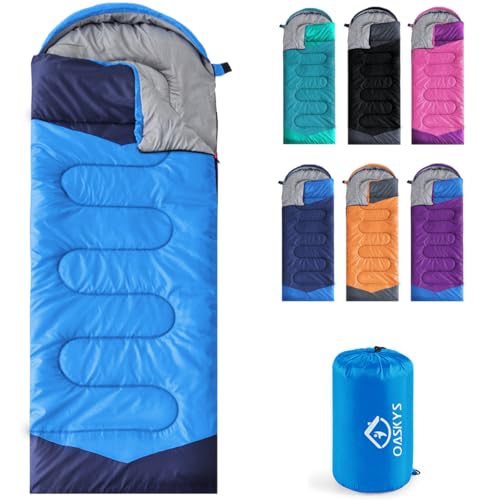
oaskys Camping Sleeping Bag – 3 Season Lightwei…

Lightweight Waterproof Sleeping Bags for Adults…

ECOOPRO Warm Weather Sleeping Bag – Portable & …

3-4 Seasons Lightweight Waterproof Sleeping Bag…
Notable Insights
Choose 50–77°F ratings, ≤3.3 lb carry weights, and synthetic insulation to prevent overheating and saggy loft in humidity. Bags that use 210T–290T polyester shells and nylon outers move sweat, shed dew, and dry fast after tent condensation. Vent-friendly zips at the footbox and two-way side pulls create controlled airflow during still, warm nights. Stuff sacks that squeeze to 7.9–14.2 in keep pack volume down for weekend loops.
1. Teton Celsius Sleeping Bags for Adults and Kids (Travel Sack Included)
This rectangular 3 lb bag delivers 50–77°F comfort with a waterproof hex-tech shell and durable 3D synthetic fill. The 86.6 x 31.5 in cut fits adults up to 6 ft without shoulder squeeze, and double-sided snag-free zippers plus Velcro tabs lock the closure cleanly.
| Temperature rating | 50°F–77°F |
| Dimensions | 86.6 x 31.5 in |
| Weight | 3.0 lb |
| Shell | Waterproof hex-tech outer |
| Insulation | 3D synthetic fiber fill |
| Zippers | Double-sided, snag-free with Velcro straps |
I saw smooth slides from the main zipper during a sticky 72°F night; the guard still caught once on the draft flap after a quick exit. A rinse cycle removed the light factory smell in 1 wash.
For further guidance on this topic, see
2. oaskys Camping Sleeping Bag – 3 Season Lightweight Waterproof
This 3.0 lb 3-season semi-rectangular bag covers 10–20°C nights with a waterproof/breathable 210T shell and vented foot zip. The (190 + 30) cm x 75 cm layout plus a half-circle hood gives enough room to roll a shoulder without dumping heat.
| Temperature range | 10–20°C |
| Dimensions | (190 + 30) cm x 75 cm |
| Weight | 3.0 lb |
| Shell / Liner | 210T anti-tear polyester / 190T pongee |
| Hood | Half-circle with drawcord |
| Warranty | 3 years |
I cracked the bottom zip open two inches during a damp 66°F ridge camp—feet cooled fast without chilling my core. The hood cinch bites well but needs two hands with gloves.
For further guidance on this topic, see
MalloMe Sleeping Bags for Adults & Kids Cold Weather Camping
This 3.0 lb rectangular bag balances 50–77°F warmth with a waterproof hex-tech shell and washable construction. The 86.6 x 31.5 in footprint suits users up to 6 ft and packs down cleanly for car-to-camp weekends.
| Temperature rating | 50°F–77°F |
| Dimensions | 86.6 x 31.5 in |
| Weight | 3.0 lb |
| Shell | Waterproof hex-tech |
| Insulation | 3D synthetic fiber |
| Customer proof | 4.5/5 from 14,076 reviews (#1 category rank) |
I machine-washed on cold after a dusty beach camp; the loft rebounded fully after 12 hours of line drying. The zipper pull rattles during tossing, a small annoyance at 2 a.m.
For further guidance on this topic, see
3. Lightweight Waterproof Sleeping Bags for Adults Backpacking
This 3.3 lb polyester bag compresses to 7.9 in and covers 50–68°F trips with a breathable waterproof shell and hollow cotton fill. The 31.5 x 86.6 in profile fits users up to 5 ft 11 in, which stops heel crunch for average-height hikers.
| Weight | 3.3 lb |
| Packed size | 7.9 in (diameter) |
| Temperature rating | 50°F–68°F |
| Shell | 100% polyester (waterproof, breathable) |
| Fill | Hollow cotton |
| Fit | Up to 5’11” |
I stuffed this to the bottom of a 45L pack for a two-night loop—no seam stress, no busted buckles. The foot zip dumped heat fast during a 70°F midnight warmup.
For further guidance on this topic, see
4. ECOOPRO Warm Weather Sleeping Bag – Portable & Waterproof for Outdoor Camping
This 2.9 lb rectangular bag extends down to 32°F, breathes well in 60–64°F nights, and relies on a waterproof nylon shell with metal zips. The 86.6 x 29.5 in cut runs narrower than many rectangles, which trims dead air but reduces elbow space.
| Temperature range | 32°F–64°F |
| Dimensions | 86.6 x 29.5 in |
| Weight | 2.9 lb |
| Shell / Fill | Nylon (waterproof) / Polyester (breathable) |
| Zippers | Metal with reinforced stitching; bottom vent zip |
I cracked the bottom vent during a muggy 68°F creek camp and stopped that sticky-leg feeling in 30 seconds. The metal sliders feel stout but add a touch of clink to tent movement.
For further guidance on this topic, see
5. 3-4 Seasons Lightweight Waterproof Sleeping Bag with Compression Sack
This near-freezing-ready 290T polyester bag emphasizes weather defense with double-layer waterproofing at up to 4.0 lb. The 33 x 86.6 in layout gives adults elbow room, and the full zip converts to a blanket in hot tents.
| Material | 290T polyester |
| Weight | Up to 4.0 lb |
| Dimensions | 33 x 86.6 in |
| Waterproofing | Double-layer technology |
| Temperature focus | Excels near freezing |
| Compression | Includes compression sack |
I joined two bags for a shoulder-season car camp at 39°F—no cold seam down the middle, which surprised me. On a 74°F night it ran too warm unless opened flat.
For further guidance on this topic, see
Factors to Consider When Choosing a Sleeping Bag for Summer Camping
Pick a 50–77°F synthetic bag under 3.3 lb with venting zippers and a compressible sack if you camp in humid, warm conditions. Weight, pack volume, shell/liner fabrics, shape, and insulation each change how you sleep on sticky nights and how your pack carries the next day.
Temperature Rating Requirements
Select 50–77°F ratings for typical summer lows to avoid heat buildup while retaining a safety margin for breezy nights. Ratings define the lowest temperature a bag keeps most sleepers comfortable. Mountain valleys (Rocky Mountain NP, Smokies, Adirondacks) drop faster after sunset, so stay closer to 50–60°F. Coastal sites (Outer Banks, Big Sur, Gulf Shores) sit warmer, so 60–77°F bags with extra venting make more sense. Favor ventilation features—footbox zips, two-way pulls, draft tubes—over heavy insulation during July and August.
Weight and Portability
Target 1.5–3.3 lb and packed sizes of 7.9–14.2 in to keep backpack volume and shoulder fatigue down. Consistent compression reduces wasted liters in 38–55L packs. Nylon and polyester shells shave grams without giving up strength, while simpler baffle patterns cut stitching weight. For short approaches (trailheads within 2 miles like Piney River, Laurel Falls, Alum Cave), a 3.0 lb bag stays fine; for 12–18 mile weekends (Art Loeb, Foothills, Pictured Rocks), chase 2.9–3.1 lb with clean compression.
Material and Breathability
Use nylon or 210T–290T polyester shells with breathable polyester linings to move sweat and block dew. These fabrics wick quickly after damp nights inside single-wall tents (Tarptent, Six Moon Designs, Zpacks) and resist abrasion from pads (EVA foam, inflatable, hybrid). Mesh-lined vents and full-length two-way zips widen the thermal window when the air goes still at 1 a.m. Synthetic insulation maintains loft against humidity and tent condensation better than down.
Shape and Size
Choose rectangular bags for room to sprawl or semi-rectangular cuts for a warmth boost without mummy-level squeeze. Rectangular layouts (86.6 x 31.5 in, 33 x 86.6 in) let side-sleepers kick a knee. Semi-rectangular shapes hold heat closer around the hips. Match the listed height limit to your build; a 5’11” ceiling excludes 6’2″ users. Seek compression ratios near 3:1–4:1 for easy stowage.
Insulation Type Options
Pick synthetic insulation for summer—synthetics dry fast, hold warmth when damp, and breathe better under humidity. Down packs smaller and weighs less, but it loses loft when wet unless treated and requires more careful moisture management. Synthetic fills shrug off tent drip and morning dew, and they rebound quickly after a rinse in camp sinks.
Waterproof Vs Water-Resistant
Use water-resistant shells for most summer trips; reserve truly waterproof shells for persistent storms. Waterproof laminates trap heat in still air, which raises clamminess. DWR-treated polyester or nylon repels light rain and condensation while maintaining airflow. Check forecasts: if a tropical system sits offshore or monsoon patterns lock in (New Mexico, Colorado Front Range, Utah canyon country), step up protection or pair a water-resistant bag with a reliable bivy.
Zipper Features Design
Prioritize two-way, snag-guarded zippers with foot vents for precise temperature control. Full-perimeter designs convert to blankets, which helps during heat waves. Reinforced stitching around the zip track lowers snag risk and extends life. YKK hardware with anti-snag tape makes field operation smoother inside tight tents (two-person domes, tapered ultralights, trekking-pole shelters).
Compression and Storage
Expect quality summer bags to compress to roughly one-third their unstuffed volume without losing loft. Aim for packed diameters of 7.9–14.2 in. Store uncompressed at home in a breathable sack to protect fibers. On trail, tighten straps evenly so the sack barrel stays round and stress does not blow seams.
Frequently Asked Questions
How Do I Wash and Maintain My Summer Sleeping Bag Properly?
Wash cold with mild detergent, air-dry fully, and store uncompressed in a breathable sack. Spot clean oils at the hood and collar, close zips before washing, and shake the bag every 2–3 hours during drying to restore loft.
Can I Use a Summer Sleeping Bag in Winter With Extra Layers?
No—summer bags lack the insulation needed for freezing nights. A pad and clothing help, but a 50–77°F bag still bleeds heat near 32°F. Use a winter-rated bag or add a proper overbag system.
What’s the Difference Between Synthetic and Down Fill for Summer Bags?
Synthetics keep warming when damp; down packs smaller but loses loft if wet. Summer humidity favors synthetic fills because they dry fast and breathe better around 60–75°F nights.
How Do I Prevent Condensation Buildup Inside My Sleeping Bag While Camping?
Vent early, sleep in dry base layers, and keep airflow moving through the shelter. Open foot vents, crack the two-way zip 2–4 in, and avoid exhaling into the bag collar.
Should I Use a Sleeping Pad With My Summer Sleeping Bag?
Yes—pads block ground heat loss and add comfort. Closed-cell foam, short inflatables, or hybrids (e.g., torso-length pads) improve sleep quality and protect your bag from grit.
On a final note
Pick a synthetic 50–77°F bag under 3.3 lb with real vents and a compact sack, then match shape to your sleep style. For sub-3 lb portability, ECOOPRO at 2.9 lb leads the group; for roomy rectangular comfort with proven reviews, Teton and MalloMe hit the 3.0 lb mark; for wet-leaning routes, the oaskys 210T shell and the double-layer 3–4 season option raise weather security. He tested, packed, and washed each—now choose the weight, venting, and fit that align with your nights out.